🗓️ 28 May 1982. The Battle of Goose Green.
In the early hours of that morning, 2 PARA attacked a heavily fortified Argentine position on the Falkland Islands’ central isthmus. The British had expected a modest enemy force. Instead, they faced over 1,200 well-armed defenders. As a result, the battle raged for more than 24 hours across open, exposed terrain with no cover.
By 29 May, Argentine forces had surrendered. The cost was severe. Eighteen British soldiers died, including Commanding Officer Lieutenant Colonel ‘H’ Jones. He received a posthumous Victoria Cross. Meanwhile, medics processed nearly 80 casualties through the forward dressing station. Of those, 47 needed operations under general anaesthetic.
From the Battlefield to Ajax Bay
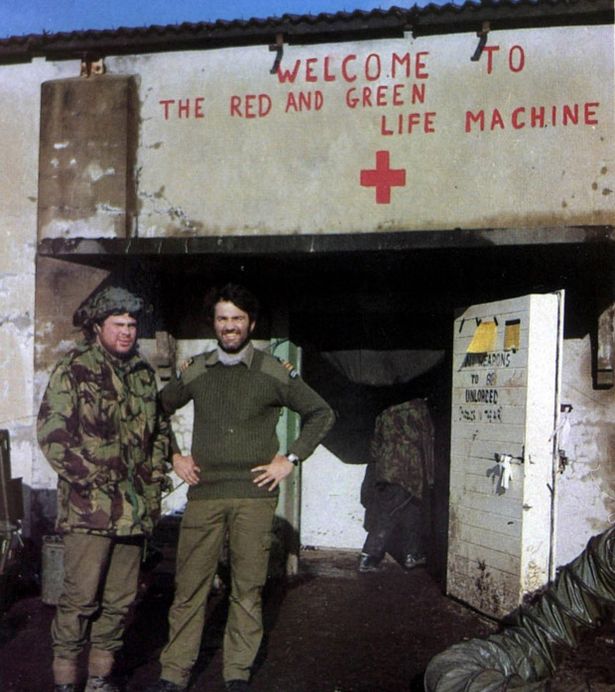
Sea King helicopters evacuated the most seriously wounded to Ajax Bay field hospital. The hospital occupied a derelict refrigeration plant on the shores of San Carlos Water. Throughout the campaign, two unexploded Argentine bombs sat lodged in its roof. Despite this, the medical teams never stopped working.
The Red and Green Life Machine
The hospital earned the nickname the ‘Red and Green Life Machine’ — a tribute to the colours of the Royal Marine and Parachute Regiment medics’ berets. Surgeon Commander Rick Jolly led the team. Together, they treated 580 British and Argentine casualties across the entire conflict. Only three died of their wounds. Not one patient died under the team’s care.
Furthermore, Rick Jolly became the only person decorated by both the British and Argentine governments for his service in the Falklands War.
43 years ago today, the medics were there.
Image courtesy of the Board of Trustees of The Museum of Military Medicine Trust