RAMC in the Malayan Emergency: Medical Courage in the Jungle, 1948–1960
In June 1948, a state of emergency was declared in British Malaya. What followed was 12 years of gruelling counter-insurgency warfare. For RAMC personnel, the Malayan Emergency presented some of the most physically and mentally demanding conditions the Corps had ever faced. Yet, as always, they rose to meet the challenge.
How the Malayan Emergency Began
On 16 June 1948, armed elements of the Malayan Communist Party killed three European estate workers at Sungei Siput, Perak. Two days later, the government declared a state of emergency.
At its core, the conflict pitted British colonial authorities against the Malayan National Liberation Army (MNLA), the armed wing of the Malayan Communist Party. Their goal was to establish an independent communist republic. As a result, the MNLA retreated deep into the jungle, making conventional military operations almost impossible.
To counter this, newly arrived troops had to be taught how to live and fight in tropical forests. Specialist training took place at a Jungle Warfare School, which developed tactics based on hard-won experience. Consequently, medical personnel faced the same steep learning curve as the soldiers they supported.
What RAMC Personnel Faced in the Field
Treating Casualties Under Fire
From the outset, RAMC medical units provided care in jungle conditions, treated wounds from ambushes and patrols, and supported base hospitals at locations such as Kinrara. Soldiers carried out patrol after patrol through dense rainforest, often for days at a time. Whenever casualties occurred, medics had to act fast and often far from any secure base.
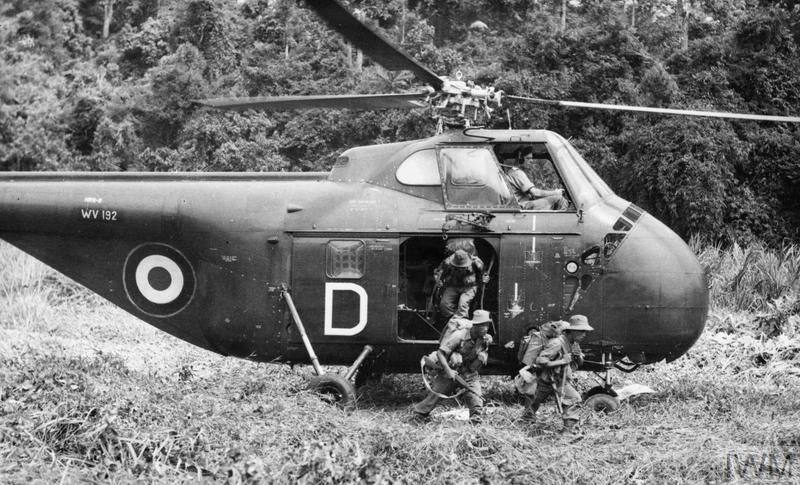
Evacuation routes were rarely straightforward. In many areas, the only options were on foot or by helicopter. Furthermore, medics frequently treated wounded soldiers in the field before organising casualty evacuation through terrain that offered little cover and no clear landing zones.
The Battle Against Tropical Disease
Gunshot wounds were not the only threat. Beyond enemy fire, the jungle itself was a constant medical challenge. RAMC personnel managed tropical diseases including malaria and dysentery, both of which posed a serious risk to operational effectiveness.
As a result, preventive medicine became central to the Corps’ work throughout this period. Key priorities included:
- Malaria prevention and treatment
- Dysentery and waterborne disease management
- Skin infections and wound hygiene in humid conditions
- Nutritional health during prolonged jungle operations
- Mental health support for personnel under sustained stress
Additionally, counter-insurgency operations were sufficiently intense to produce cases of acute psychoneurosis. This added another dimension to the medical challenge that RAMC teams had to manage alongside physical casualties.
Working Alongside Commonwealth Forces
The Malayan Emergency was a Commonwealth effort. Crucially, Britain did not fight alone, and neither did the RAMC.
Throughout the campaign, RAMC personnel worked alongside other Army Medical Services branches, including nursing services, in field ambulances, casualty clearing stations, and static hospitals. Australian, New Zealand, and other Commonwealth medical teams also contributed, together creating an integrated network of care across the theatre.
Moreover, over the 12 years of conflict, New Zealand soldiers, sailors, and airmen made a significant contribution to the Commonwealth effort. As a result, British and Commonwealth medics shared knowledge, resources, and the burden of keeping forces fit to fight.
This close cooperation shaped future British military medical doctrine. Indeed, the lessons learned in Malaya informed how the Army approached medical support in subsequent campaigns, from Borneo to the Gulf.
The Human Cost and the Lives Saved
The Malayan Emergency lasted from 16 June 1948 to 31 July 1960 — more than twelve years of sustained operations. Throughout that time, RAMC doctors, nurses, and medics were present at every level of the effort.
The conflict claimed many lives. However, the skill of RAMC personnel ensured that many who would otherwise have died survived their wounds and returned home. Rapid field treatment, effective disease prevention, and determined evacuation under fire all played a vital role in saving those lives.
Furthermore, this period placed a new emphasis on preventive medicine, hygiene, and rapid evacuation in difficult terrain, principles that remain central to military medicine to this day.
A Legacy of Service
The RAMC’s role in the Malayan Emergency deserves to be remembered alongside the Corps’ service in the World Wars and other well-known conflicts. Without question, the jungle asked something extraordinary of every soldier who served there. Nevertheless, RAMC personnel answered that call quietly, professionally, and with complete dedication.
Their contribution reflects the Corps motto perfectly: In Arduis Fidelis — Faithful in Adversity.
Above all, we honour their service and their sacrifice.
Roll of Honour
RAMC Personnel, Malayan Emergency
The following 23 personnel are recorded in the National Malaya and Borneo Veterans Association Roll of Honour. Notably, many were teenagers and young men in their early twenties. They gave their lives in service to the Corps and to those alongside whom they served.
We remember them all.
Buried at Kranji Military Cemetery, Singapore
| Name | Initials | Rank | Service No | Died | Age |
|---|---|---|---|---|---|
| Hall | J.W.N | Pte. | 23620673 | 18.5.60 | 20 |
| Jessop | R.V | Cpl. | 22367778 | 5.8.58 | 26 |
| Wilkie | J.H | Sgt. | 19039106 | 12.6.60 | 30 |
Buried at Cheras Road Christian Cemetery, Kuala Lumpur
| Name | Initials | Rank | Service No | Died | Age |
|---|---|---|---|---|---|
| Barratt | F.V | Pte. | 23146863 | 28.6.56 | 19 |
| McGill | H.M | Pte. | 23484745 | 28.5.60 | 21 |
| Shufflebotham | R | Pte. | 22171717 | 29.12.50 | 19 |
| Summers | E.T | Pte. | 22158935 | 2.8.50 | 19 |
| Sumner | F | Pte. | 22388660 | 12.6.51 | 19 |
| Williams | J.D | Pte. | 22150571 | 7.3.50 | 18 |
Buried at Batu Gajah Christian Cemetery, Ipoh, Perak
| Name | Initials | Rank | Service No | Died | Age |
|---|---|---|---|---|---|
| Dunn | A | Pte. | 22016534 | 15.12.48 | 18 |
Buried at the Christian Cemetery, Taiping
| Name | Initials | Rank | Service No | Died | Age |
|---|---|---|---|---|---|
| Brown | R.M | Capt. | 411407 | 13.3.52 | 25 |
Remains Cremated or Repatriated
| Name | Initials | Rank | Service No | Died | Age |
|---|---|---|---|---|---|
| Cooke | B.D | Pte. | 23627072 | 20.8.60 | 21 |
| Cruickshank | J.D | Lt. Col. | 66478 | 22.10.55 | — |
| Geddes | J | Capt. | 413667 | 3.2.52 | 25 |
| Green | G.M | Lt. QM | 419827 | 17.6.55 | 45 |
| Hobbs | C.EA | Pte. | 23219756 | 4.11.56 | 20 |
| Kiddell | R.G | Cpl. | 23184113 | 1.4.57 | 19 |
| Rooney | J | Pte. | 22620633 | 28.11.52 | 19 |
| Skelton | H.E | Capt. | 223518 | 19.9.50 | 43 |
| Tipler | J.A | Pte. | 22178162 | 11.10.50 | 21 |
Locally Enlisted Personnel (LEPs) / Malayan Other Ranks (MORs)
Bodies claimed by Next of Kin
| Name | Rank | Service No | Died |
|---|---|---|---|
| Mohamed Bin Kassim | Cpl. | MYA/18018183 | 30.7.52 |
| Shariff Bin Daud | Pte. | MYA/18186842 | 14.3.56 |
Source: National Malaya and Borneo Veterans Association Roll of Honour. If you have information about any of these personnel, or believe there are errors or omissions, please contact us.