Facts That Define a Legacy
On 23rd June 1898, Queen Victoria signed a Royal Warrant uniting two separate organisations. The officer-led Army Medical Staff and the enlisted Medical Staff Corps became one body. The Royal Army Medical Corps was born.
One hundred and twenty-eight years later, we mark Corps Day by looking back at some of the most remarkable chapters in RAMC history. The Corps shaped both military and civilian medicine in ways still felt today. From the battlefields of the Somme to the operating theatres of Aldershot. From blood banks built inside ammunition boxes to a 19-year-old medic scaling a Warrior vehicle under sniper fire in Iraq.
These are the stories worth telling.
Born from Catastrophe: The Crimean Scandal
The RAMC did not emerge from nowhere. Its origins lie in one of the most shameful episodes in British military history.
During the Crimean War, preventable diseases killed thousands of British troops. Typhus, cholera, and dysentery swept through the ranks. Enemy fire was not the main killer. Neglect, poor sanitation, and a lack of organised medical care were.
Public outrage followed. William Russell’s reporting in The Times and Florence Nightingale’s work at Scutari forced the government to act. In 1855, the government created the Medical Staff Corps. It was imperfect, but it was a start. Over the following decades, the Corps evolved, absorbed hard lessons, and restructured into the Royal Army Medical Corps in 1898 — a professional, properly constituted organisation capable of caring for the British soldier in the field.
The Scale of WW1: A Corps Transformed
Nothing in the RAMC’s early history prepared it for what came next.
At the outbreak of the First World War, the Corps numbered around 9,000 personnel. By 1918, that figure had grown to over 113,000. The Western Front demanded a medical response on a scale the world had never seen. Mass casualties, gas attacks, shrapnel wounds, and compound fractures arrived in overwhelming numbers.
The RAMC rose to meet the challenge. In doing so, it helped develop techniques that changed medicine permanently.
The Thomas Splint: A Device That Saved Thousands
In the early years of the First World War, a broken thigh bone was close to a death sentence. Compound femur fractures — where the bone pierces the skin — carried a mortality rate of around 87 per cent. Blood loss, infection, and brutal evacuation conditions made survival the exception.
From 1916, the RAMC began using the Thomas Splint widely. Welsh surgeon Hugh Owen Thomas invented the device decades earlier, but the medical establishment largely ignored it. His nephew, Sir Robert Jones — Consultant Orthopaedic Surgeon to the British Army — championed it. The splint immobilised the fractured leg and maintained traction. It dramatically cut blood loss and reduced further injury during evacuation.
By 1918, the mortality rate for compound femur fractures had fallen from 87 per cent to as low as 8 per cent. The splint had not changed. The decision to use it had. The RAMC trained personnel to apply it correctly — under fire, in the field — and thousands of men lived because of it.
The Thomas Splint remains in clinical use today.
The Birth of Plastic Surgery
Few chapters in RAMC history match the story of Harold Gillies and the reconstruction of the human face.
Gillies was a New Zealand-born surgeon who joined the Army Medical Corps in 1914. In France, he witnessed a new kind of injury. Heavy artillery, shrapnel, and trench warfare produced catastrophic facial wounds at a scale no one had seen before. Soldiers peered over parapets and took the full force of industrialised war in the face.
Gillies was not a plastic surgeon. The specialism barely existed. He recognised that it needed to.
He lobbied the War Office and, in January 1916, opened one of the first dedicated plastic surgery wards at the Cambridge Military Hospital in Aldershot. The Somme offensive then overwhelmed the unit. Gillies pushed for something larger. In June 1917, the Queen’s Hospital opened at Sidcup in Kent — the largest centre of its kind in the world.
Between 1917 and 1921, the hospital admitted over 5,000 servicemen and completed more than 11,000 operations. Gillies developed the “tubed pedicle” — a flap of skin from the chest or forehead, stitched into a tube to preserve the blood supply, then swung across the face. The technique transformed survival rates and laid the foundations of modern reconstructive surgery.
Gillies later received a knighthood. Today, the world regards him as the father of modern plastic surgery.
The World's First Blood Bank
In 1917, American medical officer Oswald Hope Robertson joined the RAMC on the Western Front. He had been studying blood transfusion at Massachusetts General Hospital when the United States entered the war. What he did next changed medicine.
Direct blood transfusions required a donor alongside the patient. Robertson saw the problem immediately. He proposed a different approach: collect blood in advance, treat it with sodium citrate to stop clotting, and store it in ice-packed ammunition boxes near the front. He used Type O blood — the universal donor type — which works safely for most patients regardless of blood group.
At the Battle of Cambrai in November 1917, Robertson tested the system in action. His “blood depot” was the forerunner of the modern blood bank.
The chest held around 22 units. The scale was small. But the principle was enormous — donated blood could be collected in advance, stored, and delivered where needed. That idea became one of the defining medical innovations of the twentieth century.
Two Victoria Crosses, Twice: The RAMC's Extraordinary Double VC Winners
Only three men in the entire history of the Victoria Cross have received it twice. Two wore the RAMC badge.
Surgeon Captain Arthur Martin-Leake earned his first VC in the Boer War in 1902. He treated a wounded soldier just 100 yards from the enemy line. Enemy fire hit him. He kept working until exhaustion stopped him — having first ordered that other wounded men receive water before him. In 1914, near Zonnebeke in Belgium, he earned his Bar. He rescued wounded men while enemy fire continued around him.
Captain Noel Chavasse earned his first VC on the Somme in 1916. He tended the wounded in the open all day under heavy fire, then returned to no man’s land through the night to search for survivors. He earned his Bar posthumously in 1917 at Passchendaele. Severely wounded, he refused to leave his post. He kept treating the injured for two days. A shell wound to the stomach proved fatal. He was 32 years old.
Both men were non-combatants. Both chose, again and again, to move towards the wounded rather than away from danger.
Private Michelle Norris: The First Woman to Win the Military Cross
On the night of 11 June 2006, Private Michelle Norris served as a Combat Medical Technician with the 1st Battalion, The Princess of Wales’s Royal Regiment, in Al Amarah, Iraq.
A well-organised enemy force of more than 200 opened heavy, sustained fire on her company. The vehicle commander, Colour Sergeant Ian Page, took a bullet to the mouth. Norris was 19 years old. She climbed out of her Warrior patrol vehicle and scaled the outside of it under fire. A bullet struck the radio inches from her knee. She reached the wounded man, administered first aid through the hatch, then helped drag him to safety inside the vehicle.
In December 2006, the Military Cross was gazetted in her name. She became the first woman in British Army history to receive the decoration.
Her commanding officer summed it up plainly: “Private Norris acted completely selflessly and, in the face of great danger, concentrated on her job and saved someone’s life.”
Beyond the Battlefield
The RAMC has never limited itself to conventional warfare. The Corps deployed to West Africa during the Ebola crisis as part of Operation Gritrock. It supported domestic hospitals during the COVID-19 pandemic. RAMC personnel have served in disaster zones, humanitarian emergencies, and peacekeeping operations around the world.
The motto says it simply: In Arduis Fidelis — Faithful in Adversity. The Corps has proved it in every theatre, in every era.
The RAMC Association: Over a Century of Connection
In January 1925, veterans of the First World War came together to found the RAMC Association. Sir William Leishman — one of the most distinguished medical officers in British Army history — served as its first President.
For over a century, the Association has connected veterans, preserved Corps history, and supported the welfare of former members and their families. Branches now exist across the United Kingdom. Membership remains open to all who have served or been associated with the Royal Army Medical Corps, wherever in the world they may now live.
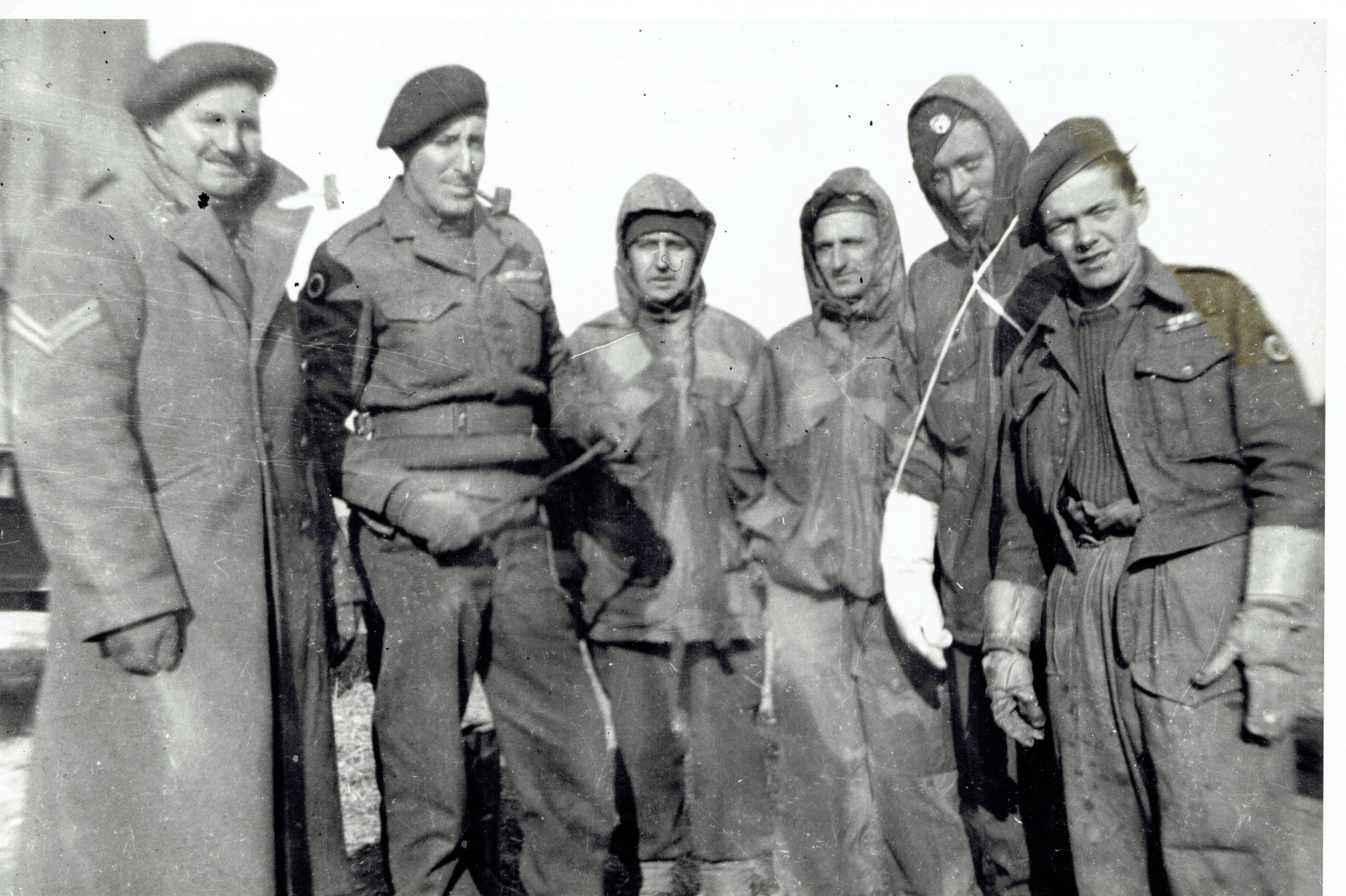
Image courtesy of the Board of Trustees of The Museum of Military Medicine Trust