Operation Banner: The RAMC’s 38-Year Service
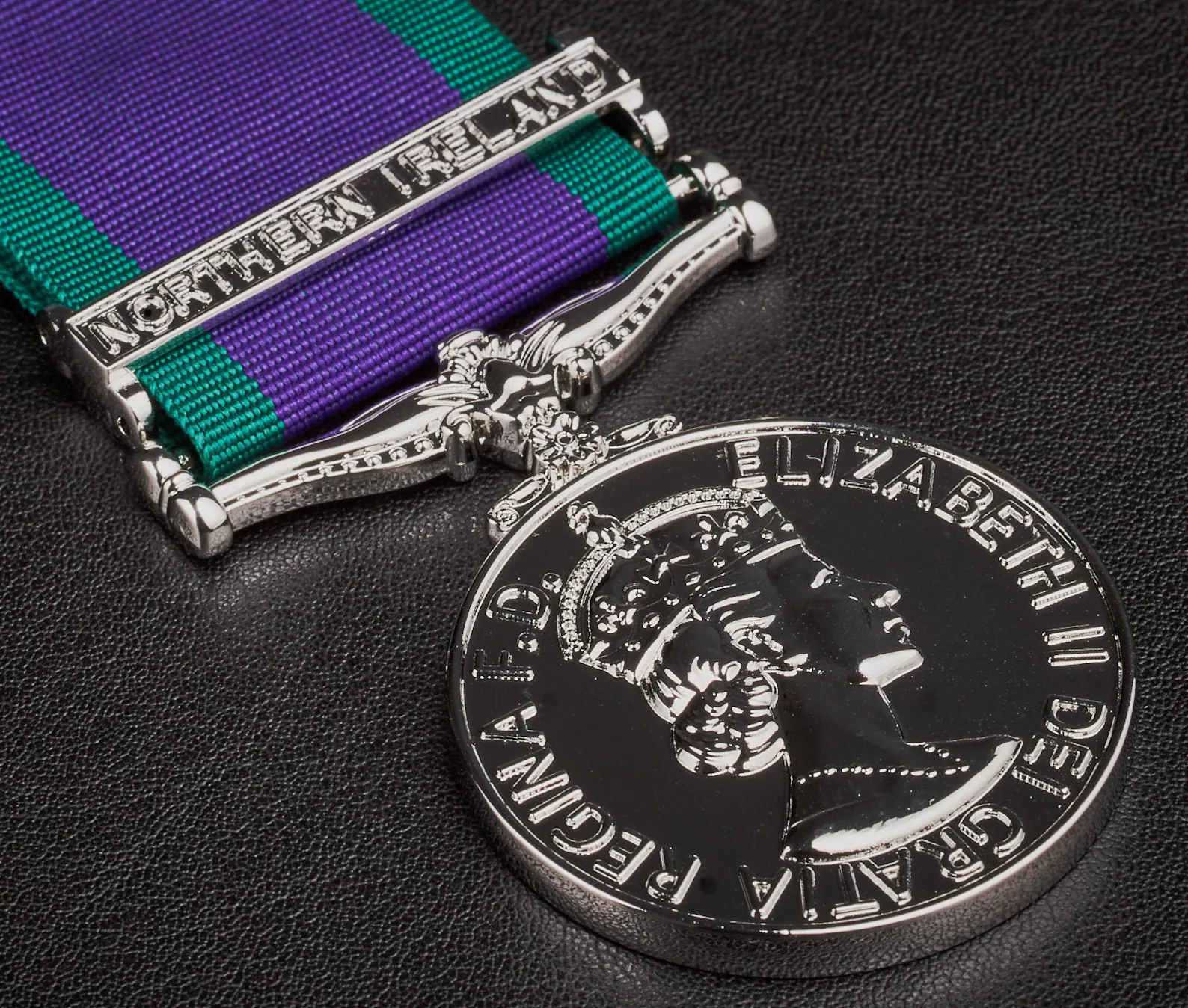
On 14 August 1969, British troops moved onto the streets of Derry as rioting spread across Northern Ireland. This deployment, codenamed Operation Banner, would become the British Army’s longest continuous operation. It ran for 38 years, finally ending on 31 July 2007.
For the Royal Army Medical Corps, Operation Banner meant something specific. It meant treating gunshot wounds and bomb injuries in cities and towns, not on distant battlefields. It also meant running medical support for a force spread across hundreds of bases, checkpoints and patrol routes. And, as one attack in 1991 proved, it meant that even a hospital ward was not always safe.
Answering the Call in 1969
When Chichester-Clark’s government requested military support that August, few expected the deployment to last more than a few months. Instead, Operation Banner grew into a campaign that touched almost every part of the British Army, including its medical services.
RAMC personnel supported units across Northern Ireland from the earliest weeks of the deployment. Their work covered primary healthcare and pre-hospital emergency care. It also covered full hospital treatment for military casualties and, often, local civilians caught up in the violence. This work continued largely unchanged in its purpose for nearly four decades, even as the nature of the threat evolved.
A War That Reached the Hospital Ward
Most people picture military medicine happening at the roadside or in a field ambulance. However, the RAMC’s Operation Banner service also included staffing a permanent military wing at Musgrave Park Hospital in Belfast. There, service personnel and their families were treated alongside civilian patients.
On 2 November 1991, that wing became a target. The Provisional IRA planted a 20lb Semtex device in a service tunnel connecting the hospital’s buildings. The blast killed Warrant Officer Class 2 Philip Cross of the RAMC and Driver Craig Pantry of the Royal Corps of Transport. Nine further Army Medical Services personnel were injured in the explosion. Two children, a five-year-old girl and a four-month-old baby being treated nearby, were hurt as well.
WO2 Cross had served 17 years with the Corps. His death, inside a hospital built to heal rather than harm, remains one of the starkest examples of what Operation Banner asked of RAMC personnel. Danger did not end at the wire of a barracks or the tailgate of an ambulance. It could reach into the ward itself.
In 1998, staff of the Duke of Connaught Unit laid a commemorative stone at Musgrave Park to honour both men. It stands as a permanent reminder of their sacrifice.
38 Years, Countless Acts of Service
Across the full span of Operation Banner, RAMC personnel carried out a wide range of duties, including:
- Providing frontline first aid and casualty evacuation following bombings and shootings
- Staffing military hospital wings, such as the one at Musgrave Park
- Delivering routine and emergency healthcare to soldiers and their families based in Northern Ireland
- Treating civilians alongside military casualties, regardless of the circumstances of an incident
- Supporting the wider Army Medical Services structure that eventually became today’s 210 (North Irish) Multi-Role Medical Regiment
This combination of frontline risk and steady, unglamorous routine care defined the Corps’ contribution to this campaign. Consequently, the RAMC’s work during this period is not remembered through a single battle. Instead, it is remembered through 38 years of sustained, often overlooked, service.
Remembering the Corps' Sacrifice
Operation Banner ended in 2007. Its cost is still felt by the families and former colleagues of those who did not return home. WO2 Philip Cross and Driver Craig Pantry are among them.
As Operation Banner’s anniversary passes each year, it is worth remembering that RAMC personnel served wherever they were needed. This included places that should have been safe. Their legacy continues to shape the values of today’s Army medics.