When Medical Courage Met Military Crisis: The RAMC at the Battle of the Marne
September 1914 changed the course of the Great War, and it changed battlefield medicine forever. As the First Battle of the Marne raged across France, the RAMC at the Battle of the Marne faced its greatest test yet. Over six punishing days, RAMC doctors, orderlies, and stretcher-bearers worked without rest, treating wounded soldiers as artillery thundered overhead.
This article looks at what that week actually demanded of RAMC personnel, and why their response still shapes military medicine today.
The Scale of the Crisis
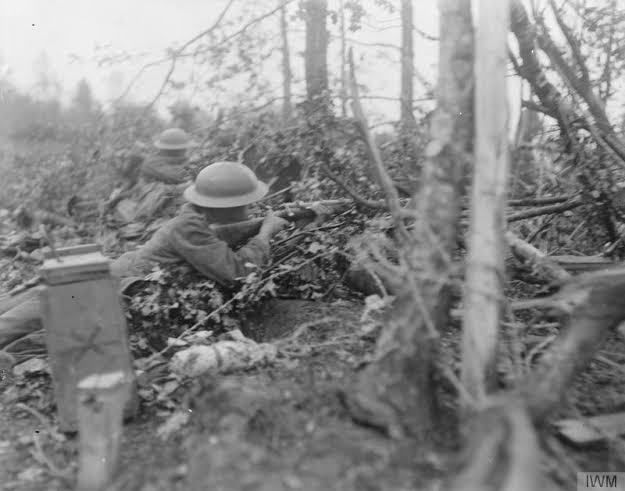
The First Battle of the Marne ran from 5 to 12 September 1914, as French and British forces halted the German advance just short of Paris. Historians estimate the combined casualties among all combatants at over 500,000, making it one of the costliest engagements of the war’s opening months. The British Expeditionary Force alone suffered thousands of casualties in a matter of days.
For the RAMC, these figures were not abstract. Every wounded man had to be found, stabilised, and moved, often under fire and always against the clock. Consequently, the corps was pushed into a role far larger than anything its peacetime training had prepared it for.
Field Hospitals Under Fire
RAMC personnel established field hospitals and dressing stations wherever the fighting allowed, frequently in barns, churches, or the open ground behind the lines. These improvised sites had to function as fully as any permanent hospital, despite lacking proper facilities. Meanwhile, stretcher-bearers crossed contested ground repeatedly to bring in the wounded, often exposed to the same shellfire as the infantry they served.
Shifts of 48 hours or longer became common during the worst of the fighting. Nevertheless, the RAMC’s commitment to preserving life held firm, even as casualty numbers overwhelmed available resources. This resilience under pressure became a defining feature of the corps’ reputation.
A System Tested and Expanded Under Fire
The RAMC did not arrive at the Marne without a plan. It already operated a “chain of evacuation,” moving casualties in stages from regimental aid posts near the front, through dressing stations, to casualty clearing stations and on to base hospitals. However, nothing in peacetime planning had prepared this system for casualties on the scale the Marne produced.
Consequently, the battle forced rapid, practical adaptation rather than invention from scratch:
- Sorting the wounded by urgency became essential as dressing stations were overwhelmed, an early and pressing form of what later became formal triage.
- Casualty clearing stations were pushed further forward, bringing treatment closer to the fighting rather than relying solely on distant base hospitals.
- The evacuation chain itself was stretched and refined, exposing gaps that the RAMC worked quickly to close in the weeks that followed, including the introduction of motor ambulance convoys on the Aisne the following month.
The Marne, in other words, was less a moment of invention than a brutal proving ground. It exposed exactly where the existing system needed to adapt, and those lessons shaped how the RAMC organised battlefield care for the rest of the war.
A Legacy of Sacrifice and Skill
Many of the individuals who served at the Marne went unrecorded by name, yet their collective impact was immense. Their work demonstrated, decisively, that battlefield medicine could keep pace with the scale of modern industrial warfare. This lesson shaped RAMC practice for the rest of the First World War and beyond.
Today, the RAMC Association remembers their sacrifice and professionalism during one of history’s most consequential battles. Their example remains a foundation for the values the corps holds to this day.
Frequently Asked Questions
When was the First Battle of the Marne? The battle was fought from 5 to 12 September 1914, halting the German advance on Paris.
What role did the RAMC play at the Marne? RAMC doctors, orderlies, and stretcher-bearers ran field hospitals and clearing stations, treating large numbers of wounded under difficult and dangerous conditions.
Why is the Battle of the Marne significant for military medicine? It exposed the limits of the RAMC’s existing evacuation system under mass casualties, driving rapid adaptations, such as forward-positioned casualty clearing stations, that shaped battlefield care for the rest of the war.