CAPTAIN MALCOLM PLEYDELL, M.C., R.A.M.C.
Hundreds of books have been written about the Special Air Service (SAS), many of them focusing on its formation and wartime exploits. Yet the first book about the SAS was written in 1945 by Captain Malcolm James Pleydell, M.C., R.A.M.C.
When the Special Air Service was created in the Western Desert in 1941, almost everything about it was unconventional. With the aid of the Long Range Desert Group (LRDG), small groups of men travelled enormous distances across hostile territory, attacked enemy airfields and installations, and then disappeared back into the desert. Operating far beyond the normal reach of their own forces, the SAS had to rely solely on its own integral medical support when things went wrong.
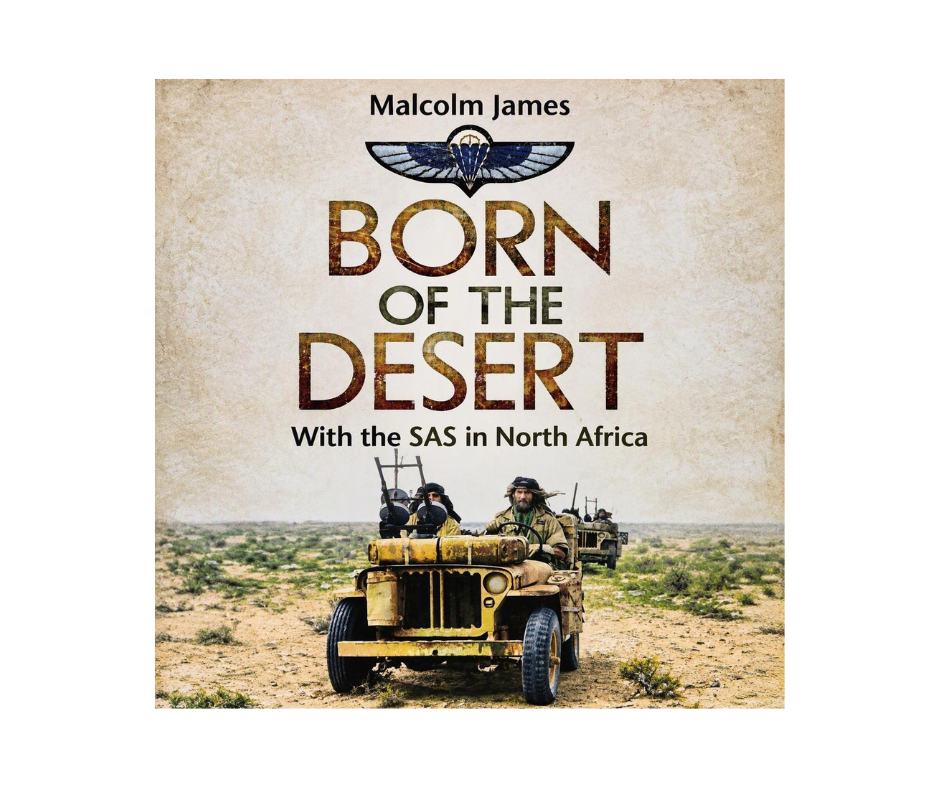
BORN OF THE DESERT
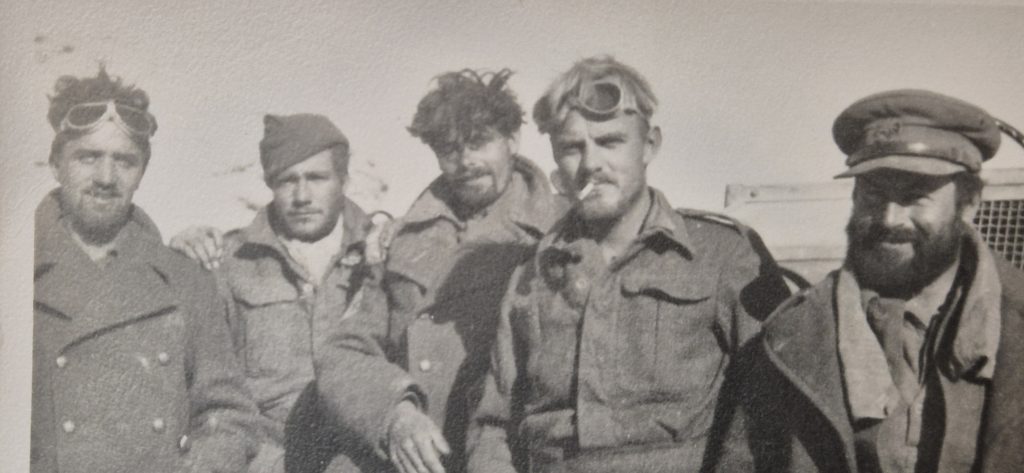
Pleydell joined L Detachment, Special Air Service Brigade, on 6 June 1942. Writing under the nom de plume Malcolm James, he later recorded his experiences with the unit in Born of The Desert. When the book was published in 1945, George Orwell reviewed it positively in The Manchester Evening News. It has remained in print ever since and is regarded by modern authors and historians as a classic: one of the finest contemporaneous accounts of the wartime SAS, particularly its founders and leaders, David Stirling and Paddy Mayne.
Popular histories of the early SAS understandably concentrate on David Stirling, Paddy Mayne, desert navigation, airfield raids and the destruction of enemy aircraft. Pleydell offers a different perspective: the challenge of providing effective medical care to a unit whose methods and concept of operations were still in their infancy.
Pleydell’s story provides a fascinating, early glimpse of a medical requirement that would continue to develop alongside the SAS itself: providing effective medical care to small teams operating remotely, independently and often beyond the immediate reach of conventional support. When Pleydell joined L Detachment, the SAS was still a remarkably small organisation. Its methods were evolving through experience, improvisation and necessity.
What treatment could be carried out in a jeep, on the back of a truck or beneath it, or delivered in a cave if immediate trauma surgery was required while enemy aircraft circled overhead? How much medical equipment could be justified when every vehicle also needed fuel, water, ammunition and other specialist equipment? What happened when a man was seriously wounded hundreds of miles from a hospital? And, perhaps most difficult of all, what happened when a casualty could no longer be moved without jeopardising himself, the rest of the patrol or even the entire operation?
Pleydell accompanied the SAS during its operations in North Africa throughout 1942 and into 1943. His account takes the reader through raids, long desert journeys, casualties, exhaustion and the realities of maintaining men who were operating in an exceptionally unforgiving environment. Later editions of Born of The Desert have been supplemented by historical notes and appendices, but the value of the original account lies partly in the fact that Pleydell wrote it so soon after the events themselves.
Benghazi and an impossible decision
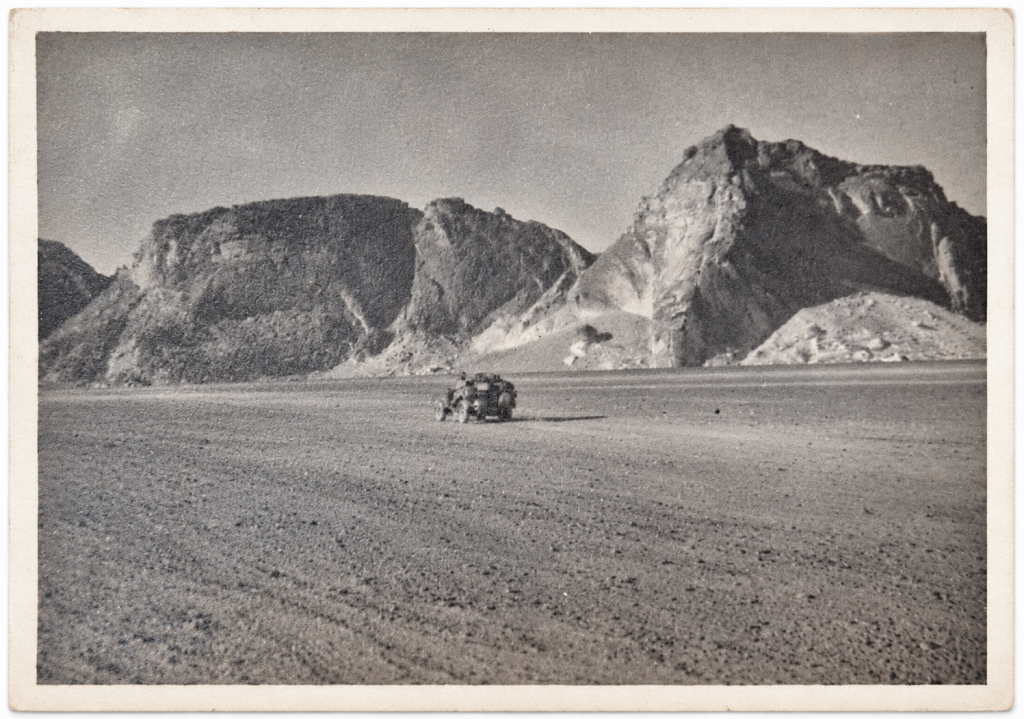
Perhaps the starkest example of the challenges Pleydell and his R.A.M.C. medical orderlies faced, came during Operation BIGAMY, the September 1942 attempt to raid Benghazi seaport and other airfields in the area. In the aftermath, Pleydell faced an impossible decision: several severely wounded men were unlikely to survive the arduous journey of hundreds of miles back to the SAS base in Egypt. Their best chance of survival was to be left in the hands of the enemy and treated as prisoners of war.
A coin was tossed to decide which R.A.M.C. medical orderly would remain behind with the wounded, knowing that he too would be taken prisoner. In Born of The Desert, Pleydell gave the medic the pseudonym Johnson. His true identity has remained a mystery for more than 80 years, but recent research has now identified him correctly.
Pleydell served with distinction on several SAS operations during 1942 and 1943. His gallantry during Operation BIGAMY earned him the Military Cross. The citation reads as follows:
“On 14 September 1942 1st Special Air Service Regiment raided Benghazi and then withdrew to the escarpment East of the town. During the next two days it was extremely dangerous to move by day owing to the Italian and German aircraft which were searching the area bombing and machine-gunning anything seen. Captain M. J. Pleydell, RAMC, the Medical Officer attached, attended to the wounded without any thought of his own safety. On one occasion while he was removing a bullet from Captain R. M. E. Melot’s thigh a German plane was circling overhead. On being told that Corporal A. Drongin, who had been wounded in the stomach, was too ill to be moved he drove five miles to him and operated. On the 15th at 1400 hours the main body of the Regiment was discovered by the enemy airforce in a narrow wadi. From then until dusk, they were bombed and machine-gunned incessantly. Doctor Pleydell was not in the wadi when they were discovered but on hearing the bombs and seeing what had happened, he drove back. In the wadi he moved around the twelve wounded giving morphia and dressing their wounds, paying no attention to the bombs or bullets. Being as he was, 500 miles from the nearest Advanced Dressing Station, he undoubtedly saved many lives by his bravery and skill. Note: This officer has carried out consistent good work on three other operations. “
Commanding, 1st Special Air Service Regiment” Lieutenant-Colonel H.J.Cator, MC
A doctor for a different kind of war
Pleydell qualified in April 1939 and joined the R.A.M.C. in May 1940. His first major experience of war came during the evacuation from Dunkirk in 1940, when he served as medical officer aboard a pleasure steamer taking troops off the beaches. With around a thousand men aboard, Pleydell was treating wounded soldiers below decks when the vessel collided head-on with a destroyer entering the harbour. Fearing the ship might sink, he helped move stretcher cases towards the deck before the damaged steamer eventually limped back to Dover. The experience affected him deeply: decades later he recalled that the sounds and sensations of that night could still trigger vivid memories, describing the “mental scars” of Dunkirk as something that had never completely left him.
Pleydell subsequently served in the North African campaign as a medical officer with the Brigade of Guards. His diaries portray a doctor working unusually close to the fighting, treating casualties amid air attacks, shellfire, rapidly moving front lines and the environmental hardships of desert warfare. He was candid about fear and the fluctuating nature of courage, but equally willing to challenge senior officers when he believed medical judgement required it. For example, insisting that a soldier suffering from battle fatigue should be evacuated despite considerable pressure to return the man to the front.
In June 1942, Pleydell volunteered for L Detachment, Special Air Service Brigade, and served with the unit until March 1943. He subsequently served as a medical officer at 64th General Hospital in Cairo and 90th General Hospital in Malta. During this latter posting, he wrote the account that became Born of The Desert. He returned to England in 1945, the same year the book was published. After the war, he entered public health. Pleydell died in June 2001, aged 86.
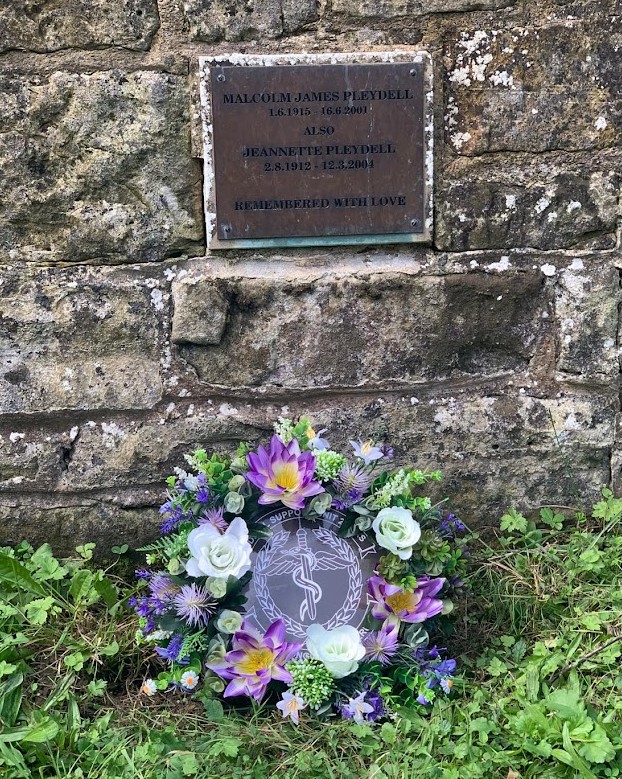
Malcolm Pleydell and the Medical Legacy of the SAS
It would be misleading to draw a straight organisational line from Pleydell’s jeep in the Western Desert to today’s Special Forces medical capability. Medicine, military organisation, communications and casualty evacuation have all changed beyond recognition. The underlying medical challenge, however, remains recognisable.
Special Forces operations demand that medical personnel are able to operate with small teams in difficult environments, often with considerable independence and with limited immediate access to higher levels of care.
The technology available to a modern medic would have been unimaginable to Pleydell, but the fundamental operational problem would not. A small group is isolated; one or more members of the team become casualties; medical resources are finite; and the evacuation may be delayed. The mission and the survival of the wider group must still be considered.
Malcolm Pleydell was a pioneer whose example has endured in the work of generations of former and serving members of the Medical Support Unit, 22 SAS.