The Royal Army Medical Corps at Dunkirk: The Medics Behind the Miracle
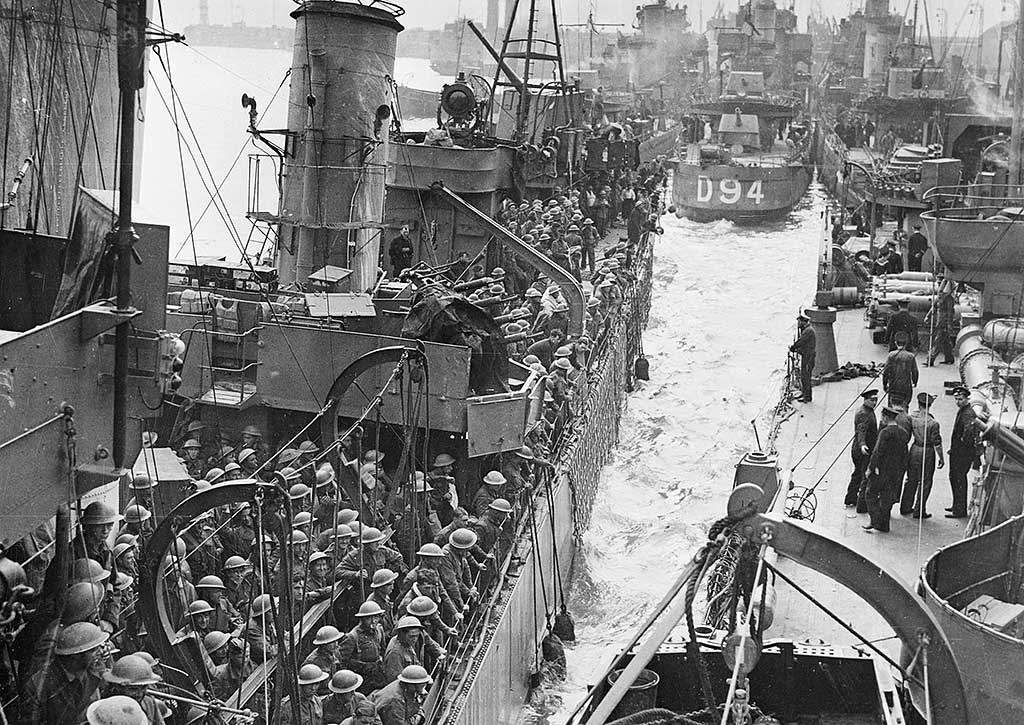
Operation DYNAMO began on 26 May 1940. The Dunkirk evacuation had started — and with it, one of the most remarkable medical efforts in British military history. Most people know the story of the little ships, the long queues on the beaches, and the 338,000 men brought home across the Channel. Yet far fewer know the story of the men of the Royal Army Medical Corps at Dunkirk — the doctors and orderlies who worked throughout the chaos to keep those men alive.
This is their story.
The Retreat to the Coast
As the British Expeditionary Force (BEF) fell back under relentless German attack, RAMC units moved with them. Field ambulances set up dressing and clearance stations in the shell-damaged hotels and buildings at La Panne, just up the coast from Dunkirk. Doctors and orderlies worked around the clock, treating the wounded as they arrived. All the while, Stuka dive-bombers circled overhead.
There was no pause in the work. Even so, the RAMC’s role went far beyond simply patching men up. It was to:
- Triage the wounded at forward dressing stations
- Stabilise casualties for the dangerous journey to the coast
- Coordinate evacuation of the most seriously injured
- Maintain care under fire, throughout the retreat and on the beaches themselves
On the Beaches: Harrowing Work Under Fire
For RAMC personnel who had made the perilous retreat to the Dunkirk beaches, a scene of carnage awaited them. Corporal Montague of No. 6 Field Ambulance took a wounded sergeant to a French hospital, where every corner and passageway was filled with the wounded and dying. Outside, the roads were blocked with abandoned and destroyed vehicles. Fight the Good Fight
When the hospitals could take no more, Montague returned to the beach. There, rows of men waited their turn for evacuation, vulnerable to wave upon wave of Stuka attacks. Montague set to work burying the dead, digging graves in the sand with his bare hands. He placed each man’s rifle in the sand at his head and tied his identity disc to the trigger guard. Fight the Good Fight
It was an act of quiet devotion in the middle of catastrophe. Indeed, it captures something essential about what the Royal Army Medical Corps at Dunkirk truly meant: duty carried out without fanfare, under impossible conditions.
Nursing Under Bombardment
Crucially, the RAMC did not work alone. Nurses worked aboard ships making repeated crossings to Dunkirk under extremely severe conditions, with bombs and shells dropping all around. Men were wounded and killed alongside their ships on the pier. Historic UK
Their behaviour under fire was described as “really splendid — never a sign of excitement nor panic of any kind.” Commanding officers noted that their steadiness was an important factor in stabilising the RAMC personnel working alongside them. As a result, many received the Royal Red Cross medal for their outstanding service. Historic UK
Captain Richard Doll: From Dunkirk to a Medical Revolution
Among the RAMC officers who survived Dunkirk was Captain Richard Doll. As a battalion medical officer, Doll managed casualties under intense combat conditions during the Allied retreat. His contemporaneous diary entries — later published in the British Medical Journal in 1990 — record the chaos of the evacuation, including treating wounded soldiers in makeshift aid posts and navigating artillery fire while awaiting rescue from the beaches. Grokipedia
Doll treated wounded men during the Channel crossing. Exhaustion finally overtook him on the boat, and he woke to find himself in Ramsgate harbour.
After the war, he went on to become one of Britain’s greatest medical scientists. Working with professor Austin Bradford Hill, Doll conducted a remarkable study of British doctors and smoking that lasted 50 years. It would forever link his name with the proof that smoking causes lung cancer. Furthermore, his work is estimated to have already avoided tens of millions of deaths in this century alone — described by colleagues as “in a way, the most extraordinary epidemiological experiment ever published.” The Lancet
The man who survived the beaches of Dunkirk went on to save millions of lives. His journey, remarkably, began in the chaos of Operation DYNAMO.
Why the RAMC’s Role at Dunkirk Still Matters
A Story Largely Untold
Films, books, and commemorations rightly honour the courage of those evacuated from Dunkirk. However, the contribution of the Royal Army Medical Corps at Dunkirk has rarely received the same attention.
These men and women did not simply come home when the boats arrived. Many stayed behind. Others sailed back and forth across a Channel under sustained air attack. Throughout it all, they upheld the Corps motto — In Arduis Fidelis: Faithful in Adversity.
What the RAMC Achieved at Dunkirk
The scale of the medical effort during Operation DYNAMO was remarkable. Consider what RAMC personnel actually did:
- Medical teams treated thousands of casualties at forward dressing stations during the retreat
- Doctors and orderlies worked at La Panne under sustained aerial bombardment
- RAMC staff coordinated the evacuation of the wounded alongside the wider military operation
- Personnel on hospital ships continued treating casualties throughout the Channel crossing
- Some RAMC units stayed in France, caring for those too badly wounded to move
As a result, a significant number of the 338,000 men who came home did so because a doctor or orderly had kept them alive long enough to board a ship.
Remembering the Medics, 85 Years On
Today marks 85 years since Operation DYNAMO began. As we remember Dunkirk, we must also remember the men and women of the Royal Army Medical Corps who were there throughout — not as bystanders, but as an essential part of the operation.
They worked in the rubble of La Panne. With their bare hands, they dug graves on the beach. On overcrowded boats in the middle of the Channel, they kept treating the wounded. Moreover, they did all of this while remaining faithful to their duty, in the most adverse conditions imaginable.
Behind the miracle of Dunkirk were the medics who kept men alive long enough to be saved.
Eighty-five years ago today, they were there.