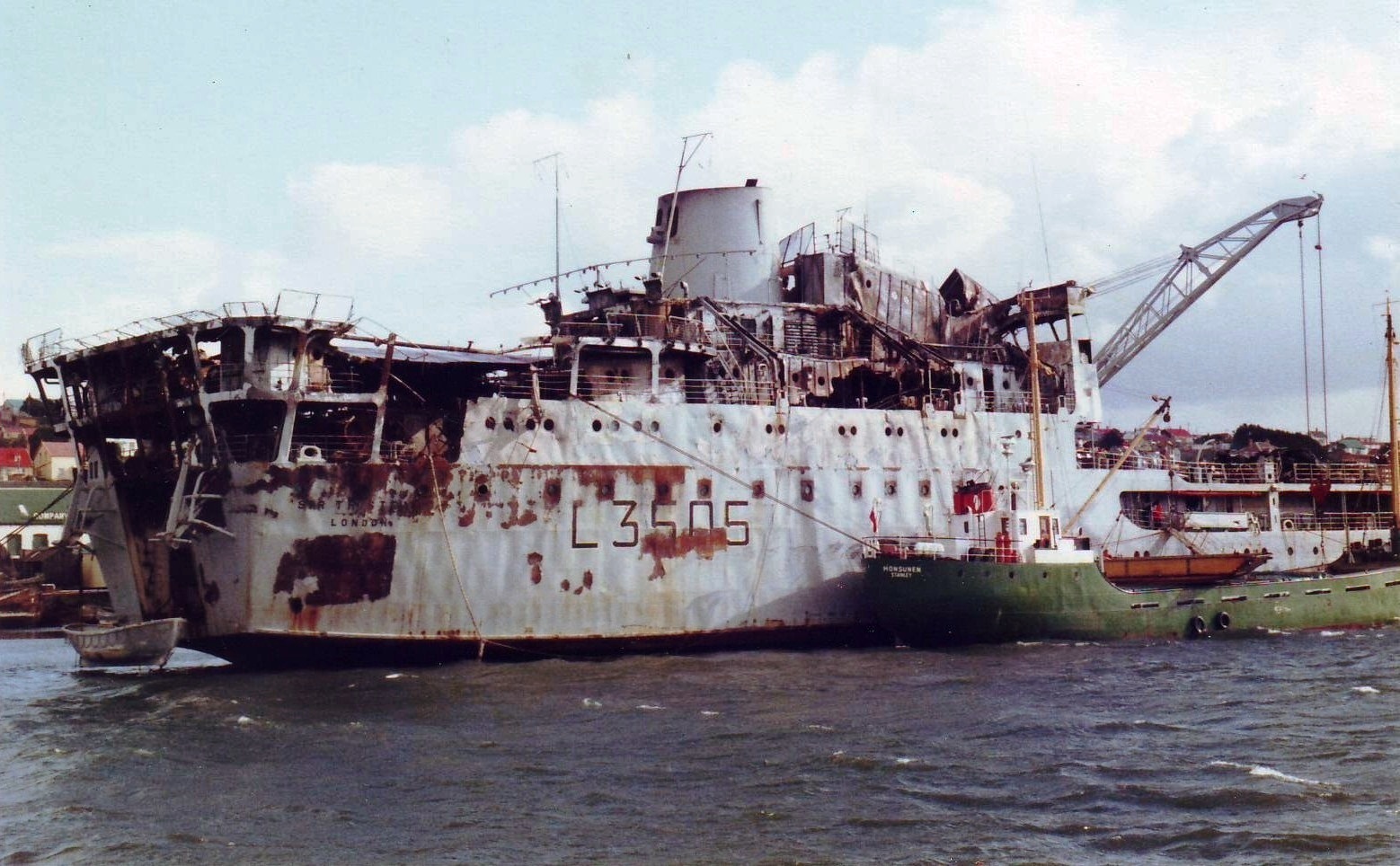
8 June 1982: How RAMC Medics Saved Lives at Bluff Cove During the Falklands War
On 8 June 1982, one of the most devastating days of the Falklands War unfolded at Bluff Cove. Argentine aircraft bombed RFA Sir Galahad and RFA Sir Tristram, killing 48 British personnel and wounding many more. While the world watched in horror, Royal Army Medical Corps (RAMC) personnel ran towards the flames.
Their actions that day are among the most remarkable in British military medical history.
What Happened at Bluff Cove?
The attack struck without warning. Argentine A-4 Skyhawks targeted both vessels as troops were still disembarking. The resulting explosions and fires caused horrific burn injuries and blast trauma across the landing site.
The human cost was immediate and enormous:
- 48 British personnel killed
- Scores more suffered severe burn injuries
- Casualties were spread across two stricken ships and the surrounding shoreline
- Medical teams faced conditions with little shelter and limited supplies
The Sir Galahad attack remains one of the defining tragedies of the entire Falklands campaign.
RAMC Personnel: Courage in the Chaos
As smoke billowed across Bluff Cove, RAMC medics did not hesitate. They moved directly into the danger zone, treating casualties under ongoing threat of further attack.
Their work that day demanded both clinical skill and extraordinary nerve.
Treating the Wounded Under Fire
Burn injuries are among the most complex trauma wounds a medic can face. RAMC personnel treated them in the open, often without adequate equipment, while fire continued to rage on the stricken ships.
They worked with:
- Speed — rapid triage in unpredictable conditions
- Adaptability — improvising care with whatever resources were available
- Professionalism — maintaining focus when the situation was at its most chaotic
Their swift response saved lives that would otherwise have been lost in those critical early minutes.
Why the Falklands War Tested Military Medicine to Its Limits
The Falklands campaign created unique medical challenges. Operating 8,000 miles from the UK, in freezing South Atlantic conditions, medical units had little margin for error. Resupply was slow. Evacuation routes were limited.
Furthermore, the compressed nature of the ground campaign meant casualties often arrived in large numbers within short windows. At Bluff Cove, that pressure reached its peak.
However, the RAMC Falklands War performance showed what trained military medics can achieve even under the most extreme pressure.
Remembering 8 June 1982
Today, we honour every person who lost their life at Bluff Cove. We also recognise the RAMC personnel whose professionalism and courage meant that more families were not torn apart that day.
Their service reflects the core commitment of the Royal Army Medical Corps: to preserve life, regardless of the personal risk involved.
As we mark this anniversary, their actions deserve to be remembered clearly and specifically, not just as part of a broader story, but as a moment when individual courage made a measurable difference.
Three members of the Royal Army Medical Corps died during the 1982 Falklands War.
They were serving with 16 Field Ambulance as part of Operation CORPORATE. All three men tragically lost their lives on June 8, 1982, aboard the RFA Sir Galahad when it was bombed by Argentine aircraft at Port Pleasant in Fitzroy.
The casualties from the RAMC were:
- Major Roger Nutbeem
- Lance Corporal Ian Farrell
- Private Kevin Preston
We will remember them.