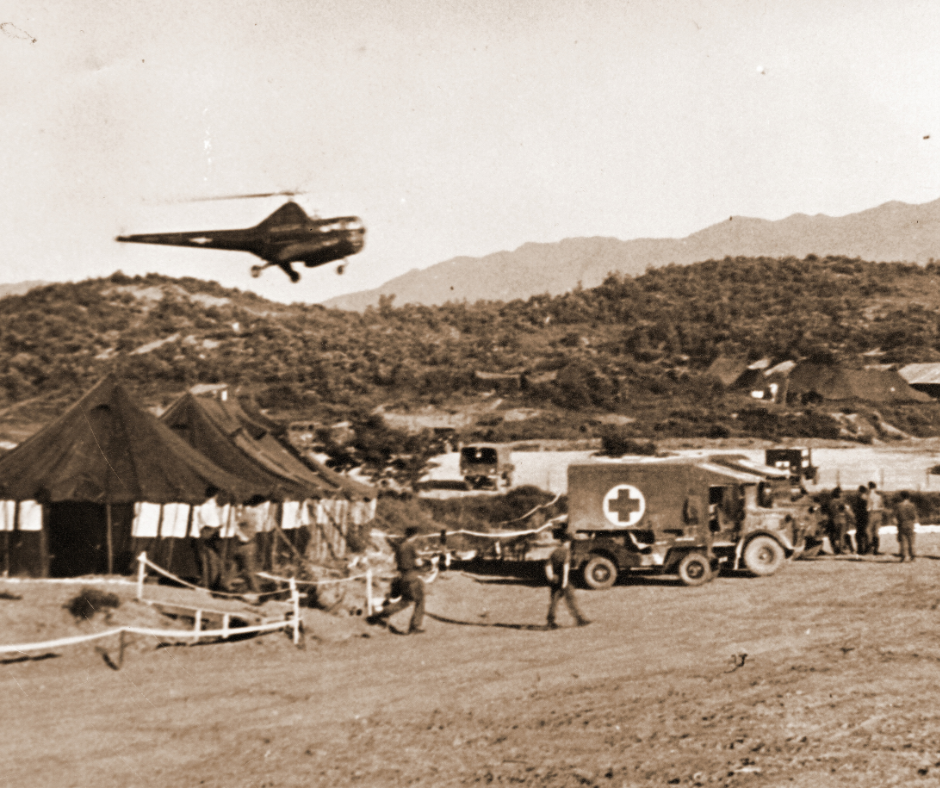
Korean War: When the Call Came, the RAMC Answered
On 25 June 1950, North Korean forces crossed the 38th parallel. Within hours, the Korean Peninsula was at war. As a result, within weeks, personnel from the Royal Army Medical Corps were on their way to one of the most demanding conflicts in British military history.
The RAMC Korean War deployment stands as a testament to the Corps’ enduring commitment: professional care at the frontline, whatever the cost.
A War the World Could Not Ignore
The United Nations responded swiftly to North Korea’s invasion of the South. Consequently, Britain joined a coalition of nations under UN mandate, and British Commonwealth forces took their place alongside American and allied troops in a conflict that lasted three gruelling years.
The human cost was enormous. The United Kingdom alone suffered around 1,078 killed in action, with overall operational deaths rising to approximately 1,100 when accidents and prisoners of war are included. Across the Commonwealth, Canada lost 516 personnel, Australia around 339, New Zealand 45, and South Africa 37. In total, more than 145,000 Commonwealth personnel deployed to the theatre.
Behind every casualty figure stood a medical team working to reduce it.
The RAMC's Role: Frontline Care in Extreme Conditions
RAMC personnel faced conditions that tested every limit of military medicine. Winters plunged to minus 30°C. Furthermore, the terrain was mountainous and unforgiving. Front lines shifted rapidly, forcing medical teams to establish care amid advances and retreats.
The challenges they overcame included:
- Treating casualties in sub-zero temperatures, where blood could freeze before a transfusion was complete
- Establishing field hospitals in remote, mountainous terrain with limited infrastructure
- Maintaining continuity of care during rapid tactical movements
- Working alongside Commonwealth and American medical units in a complex, multinational environment
Despite these conditions, RAMC personnel upheld every standard the Corps demanded of them.
26 Field Ambulance: Britain's Frontline Medical Unit
The 26th Field Ambulance, RAMC arrived in Korea in December 1950 and served as the primary British frontline medical unit. Unlike infantry battalions, which rotated as complete units, the 26th Field Ambulance stayed in theatre for the duration of the war. Instead, doctors, stretcher-bearers, and RAMC orderlies rotated in and out on individual tours of duty, keeping the unit operational while ensuring personnel received relief.
In addition, the 26th drew support from specialist RAMC teams that extended its capability:
- Field Surgical Team (FST): Delivered forward surgical capacity close to the action
- 9th Field Transfusion Team (FTT): Provided life-saving blood transfusion support
- 10th Field Hygiene Section: Tackled disease prevention and sanitation in challenging field conditions
Together, these units formed a cohesive British medical presence that punched well above their numbers.
The 1st Commonwealth Division: Unified Medical Command
A Landmark in Multinational Medicine
When the 1st Commonwealth Division formed in July 1951, it introduced a significant innovation. Rather than maintaining separate, parallel medical structures for each contributing nation, Commonwealth medical resources pooled under a single unified command. This approach avoided duplication and maximised efficiency.
Three Field Ambulances formed the division’s frontline medical backbone:
- 26th Field Ambulance (United Kingdom)
- 25th Canadian Field Ambulance (Canada)
- 60th Indian Parachute Field Ambulance (India)
Together, these three units handled frontline clearing and triage for all British, Canadian, Australian, and New Zealand combat troops. The model was pragmatic, effective, and ahead of its time.
India’s Remarkable Contribution
India sent no combat troops to Korea. Nevertheless, the 60th Parachute Field Ambulance arrived in late 1950 and performed extraordinary work. Operating directly under fire, the unit treated more than 20,000 casualties, including both UN soldiers and Korean civilians. As a result, their contribution stands as one of the most remarkable humanitarian efforts of the entire conflict.
Behind the Lines: Hospitals and Evacuation
The Chain of Evacuation
The RAMC Korean War medical system operated as a layered chain, moving casualties from the frontline to definitive care as quickly as possible.
The British Commonwealth Zone Medical Unit, established near Seoul, provided a forward medical facility. Notably, nursing sisters from across the Commonwealth nations staffed this unit. From there, seriously wounded casualties moved further back along the chain.
The British Commonwealth General Hospital (BCGH) in Kure, Japan, served as the final destination in the evacuation chain. This 400-bed facility received joint staffing from British, Canadian, and Australian medical personnel, making it one of the most integrated combined medical units of the era.
Innovation in Casualty Evacuation
Medical helicopters began appearing on Korean battlefields, offering a faster evacuation route for the critically wounded. Additionally, casualties who frontline stations could not treat moved to US Mobile Army Surgical Hospitals (MASH units) or to international hospital ships, including Denmark’s MS Jutlandia, berthed at Busan.
Meanwhile, the Canadian No. 25 Field Dressing Station, established in July 1951, expanded to a 200-bed facility. It held minor sick and injured patients for up to 14 days, deliberately keeping soldiers from evacuating to Japan for conditions that closer teams could treat.
From the Pusan Perimeter to the Imjin River
Early Crisis and Endurance
The early months of the war were desperate. UN forces fell back to the Pusan Perimeter in the south, and medical units had to function under extreme pressure with limited resources. Moreover, RAMC personnel worked continuously, often without adequate rest or resupply.
As the conflict stabilised into a war of attrition along the 38th parallel, the medical challenge shifted. Sustaining frontline troops through bitter winters, managing disease, and maintaining surgical capability all demanded constant effort and adaptability.
The Battle of the Imjin River
April 1951 brought one of the hardest engagements of the entire war. During the Battle of the Imjin River, the Gloucestershire Regiment and other UN units faced overwhelming Chinese forces. RAMC medical teams worked under intense pressure to treat casualties from a battle that became one of the British Army’s defining actions of the post-war era.
The Men Who Served: Remembering RAMC Personnel in Korea
Volunteers maintain the Roll of Honour database, drawing on CWGC records, The Times newspaper archives, and regimental records. It contains more than 4,490 entries for British casualties across all arms during the Korean War, recording those killed in action, wounded, taken prisoner, and decorated for gallantry.
RAMC personnel appear throughout, named alongside the infantrymen and gunners they served. They stood present at every significant action of the war: not as fighters, but as the people who kept the fighters alive.
A Legacy Worth Remembering
The RAMC Korean War contribution shaped how the British Army approached military medicine for decades. The unified Commonwealth medical command, the rotation system for specialist units, and the integration of forward surgical teams with field ambulances all informed doctrine that outlasted the conflict itself.
What the RAMC Demonstrated in Korea
- Adaptability: Medical personnel adjusted to terrain, temperature, and tactical realities that had no precedent in recent British experience
- Integration: The Corps worked seamlessly with Canadian, Australian, New Zealand, and Indian medical counterparts under a single command
- Continuity: The 26th Field Ambulance maintained a sustained presence throughout the conflict, supported by rotating personnel
- Innovation: Early adoption of helicopter evacuation and forward surgical teams pointed toward the future of battlefield medicine
Lest We Forget
The Korean War is sometimes called the Forgotten War. However, for those who served there, and for the families who waited at home, there was nothing forgettable about it.
On 25 June each year, the RAMC community remembers the medics who answered the call in 1950. They worked in the cold and the dark, far from home, doing what the Corps has always done: putting themselves between their comrades and the worst that war can deliver.
Their service deserves remembrance. Their legacy deserves telling.
Image courtesy of the Board of Trustees of The Museum of Military Medicine Trust